Second Saturday Science Talk: Ngā Tohunga Whakatere – The Navigators
Join us at Battle Point Observatory Saturday, May 9 at 7:00 pm for our monthly Second Saturday Science Talk! Star Party to follow if skies are clear.


Join us at Battle Point Observatory Saturday, May 9 at 7:00 pm for our monthly Second Saturday Science Talk! Star Party to follow if skies are clear.


Our weekly planetarium shows continue this month on May 9, 16, 23 & 30 at 12:30 and 2:30! There will be only one show at 2:30 pm on May 2 due to BI Parks Carnival event.

Ever thought of dipping your toes into astrophotography? Want to chat with other astrophotographers? The next meeting of the Battle Point Observatory’s Astrophotography Special Interest Group will be on Saturday, April 18, at 11 AM in the Gardiner Library inside of the Battle Point Observatory (Please note this is not on the usual second Saturday of the month).

This photograph was imaged using the Battle Point Observatory’s new rooftop telescope system by member Cole Rees and processed by member Chuck Wraith.
Source for events and links below are In-The-Sky.org, Dominic Ford, Editor. The links provide details for each event including a scale on how difficult they are to observe.
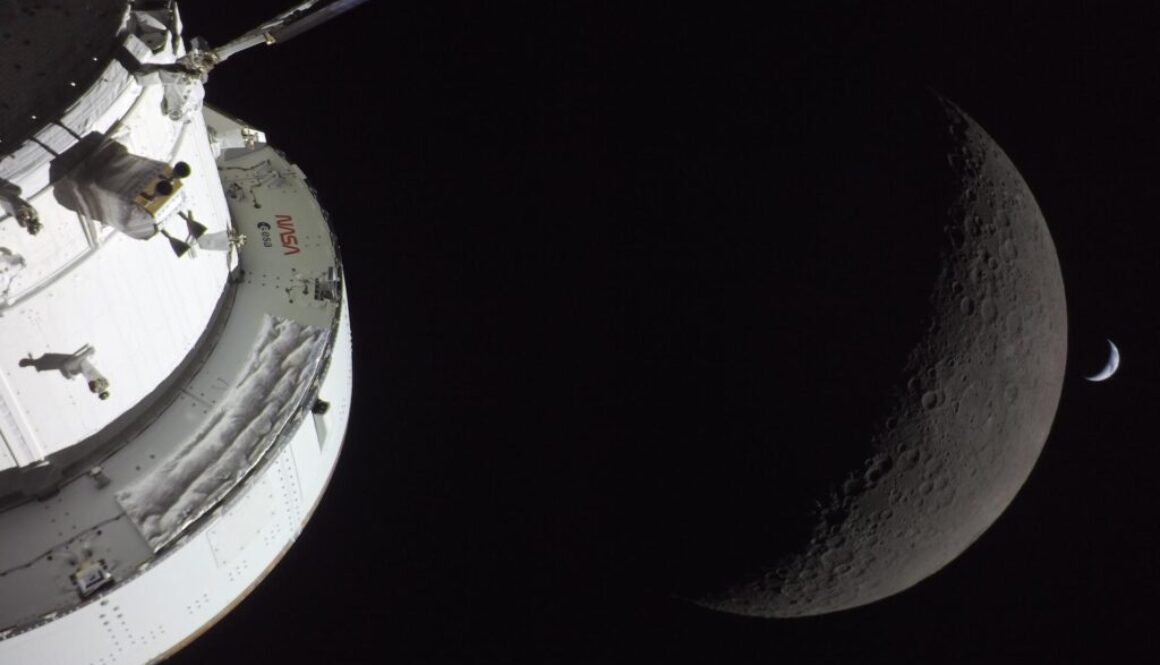
NASA’s Orion spacecraft captures the Moon and the Earth in one frame during the Artemis II crew’s deep space journey at 6:39 p.m. ET on the sixth day of the mission. The right side of NASA’s Orion spacecraft is seen lit up by the Sun. A waxing crescent Moon is visible behind it. And then, a crescent Earth, tiny compared to the Moon, is about to set below the Moon’s horizon on the right. Credit: NASA
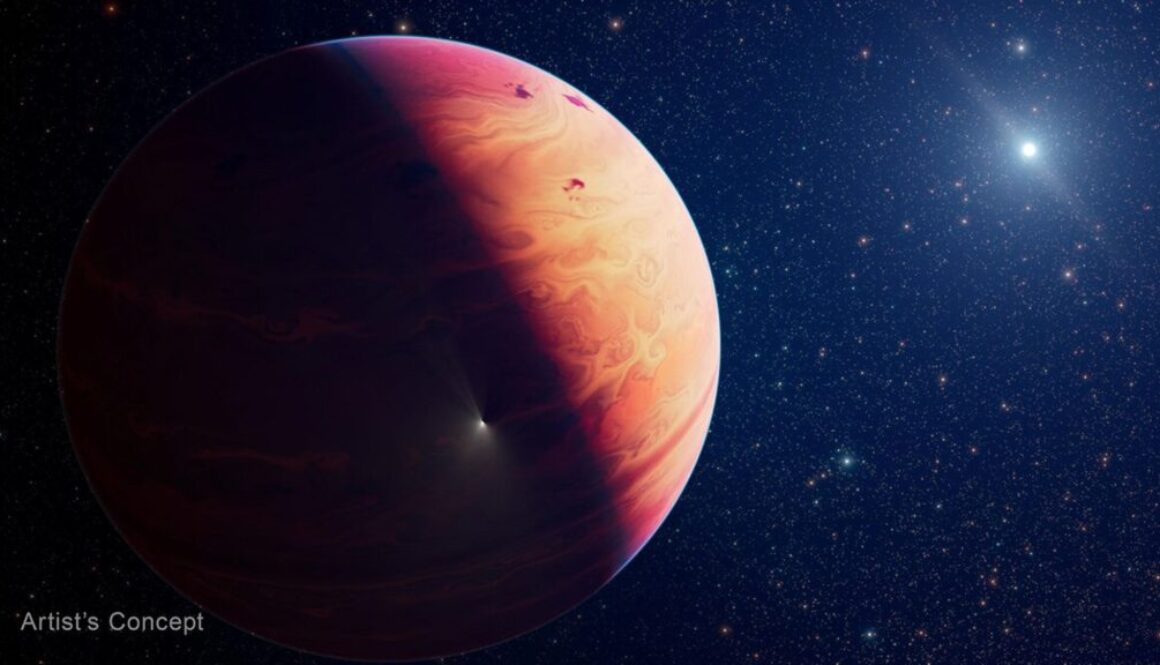
Planets, like those in our solar system, form in a bottom-up process where small bits of rock and ice clump together and grow larger over time. But the heftier the planet, the harder it is to explain its formation that way.
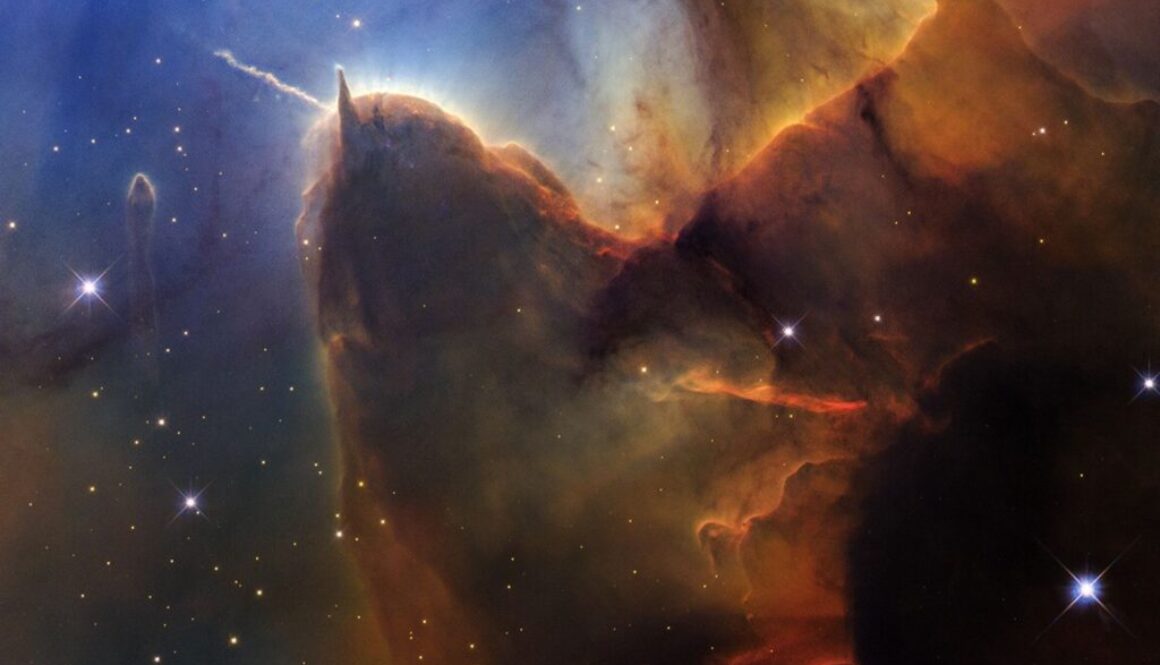
This shimmering region of star-formation, a close-up of the Trifid Nebula about 5,000 light-years from Earth, was captured in intricate detail by NASA’s Hubble Space Telescope. The colors in Hubble’s visible light image, which marks the 36th anniversary of the mission’s launch on April 24, are reminiscent of an underwater scene filled with fine-grained sediments fluttering through the ocean’s depths.
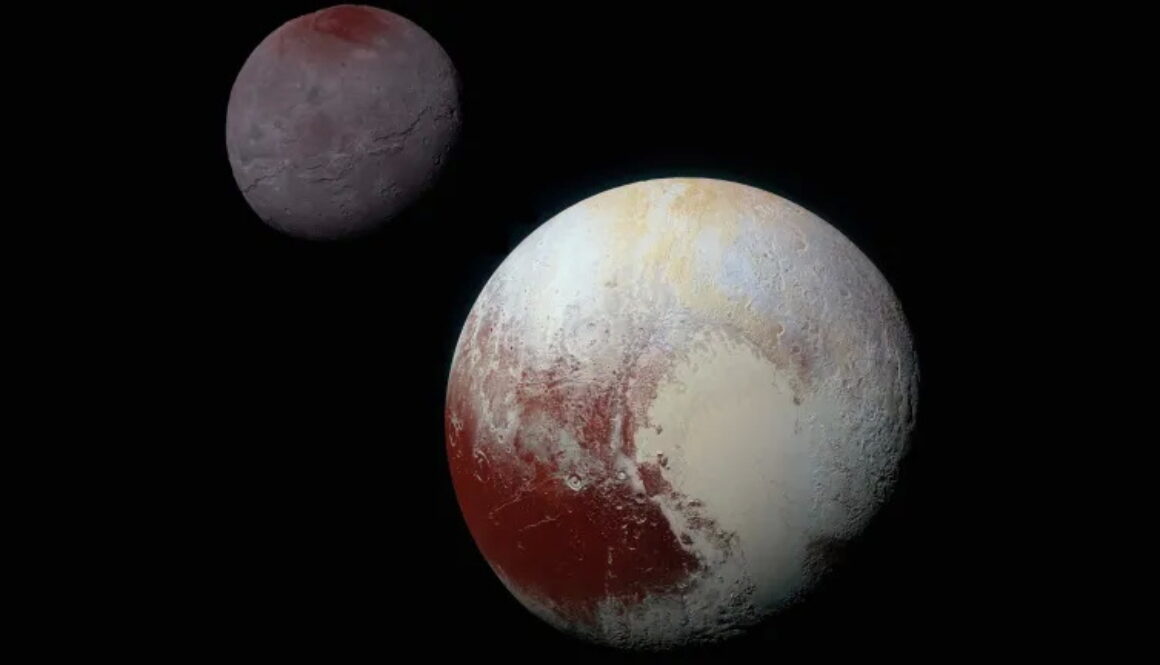
From 1929 until 2006, Pluto lived in the imagination of children and adults alike as the ninth and outermost planet in our solar system. Until 1978, with the discovery of its giant moon, Charon, it was the only known large object in our solar system that orbited beyond the reach of Neptune. But the story began to change shortly after that. In the 1990s and 2000s, a tremendous number of new objects were discovered — including planets orbiting stars other than our Sun (exoplanets) and a wide variety of Kuiper belt objects (trans-Neptunian objects) both large and small — that compelled us to rethink just what it meant for an object to be considered a planet.