
About
Vision
Igniting passion for science through the lens of astronomy.
Mission
To ignite passion for science through the lens of astronomy by creating opportunities for curious minds of all ages to experience the wonders of the universe.
2026 Directors
President – Frank Petrie
Secretary & Newsletter – Joe Mulligan
Treasurer – Terri Swanson
Facilities – Peter Moseley
Education Officer – Erin Leigh Howard
Chief Astronomer – Chuck Wraith
Director at Large – Greg Swanson
Director at Large – John Black
History
The Battle Point Astronomical Association (BPAA) was founded in 1992 and is a 501(c)(3) nonprofit organization. BPAA operates the Battle Point Observatory, formerly the home to the 27-inch Ritchie Telescope, the largest telescope accessible to the public in the Pacific Northwest. In 2024 it was removed in preparation for new, more capable telescopes.
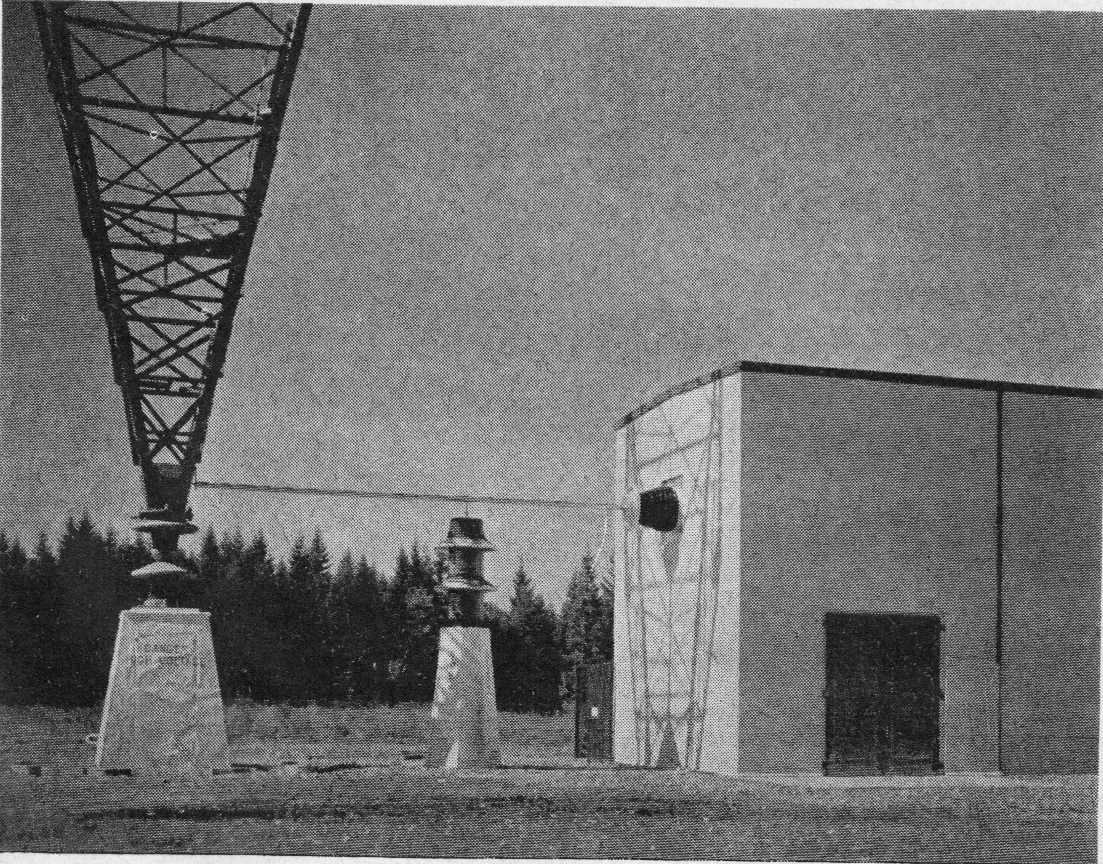
Battle Point Observatory was constructed from the shell of the Helix House, a World War II relic that in 1992 was scheduled for demolition and removal by the Bainbridge Island Parks Department. Thanks to the vision of the founders of the Battle Point Astronomical Association (John H. Rudolph, Edwin Ritchie and Mac Gardiner), that demolition never took place; instead, through private volunteer community efforts an Observatory was created. The basic construction was completed in 1997. The current Battle Point Observatory supports telescopes, the Rudolph Planetarium, the Ritchie Workshop, and an office and meeting space in the Gardiner Library.
Virtual Fly Over – Battle Point Now and Then
Check out this awesome virtual flyover by Craig Hagstrom of the Bainbridge Amateur Radio Club.
A CGI depiction of the Naval antenna farm on Bainbridge Island in WWII, superimposed on the current park on that site. This video demonstrates the concept.
What's that Sundial near Battle Point Observatory?
 Battle Point Sundial
Bainbridge Island, Washington
Latitude N 47°39’40” Longitude W 122°34’38”

This is an Equatorial Bowstring Sundial: “equatorial” because the number arc is parallel to the Earth’s equator, and “bowstring” because the gnomon wire is stretched between the tips of a supporting bow (“gnomon” is a Greek word for “pointer”). 
The Sundial faces due south and is oriented so that the gnomon is parallel to Earth’s axis and points to the north celestial pole, very near (but not exactly) to Polaris, the North Star.
As Earth turns, the Sun rises in the east, moves across the sky, and sets in the west. This causes the gnomon’s shadow to move from left to right (west to east) across the sundial’s hour scale. The shadow falls on numbers indicating the time of day. When the Sun is due south, it is “on the meridian” and the local solar time is noon.
More

