
Scientists Spot a New Crater on the Moon
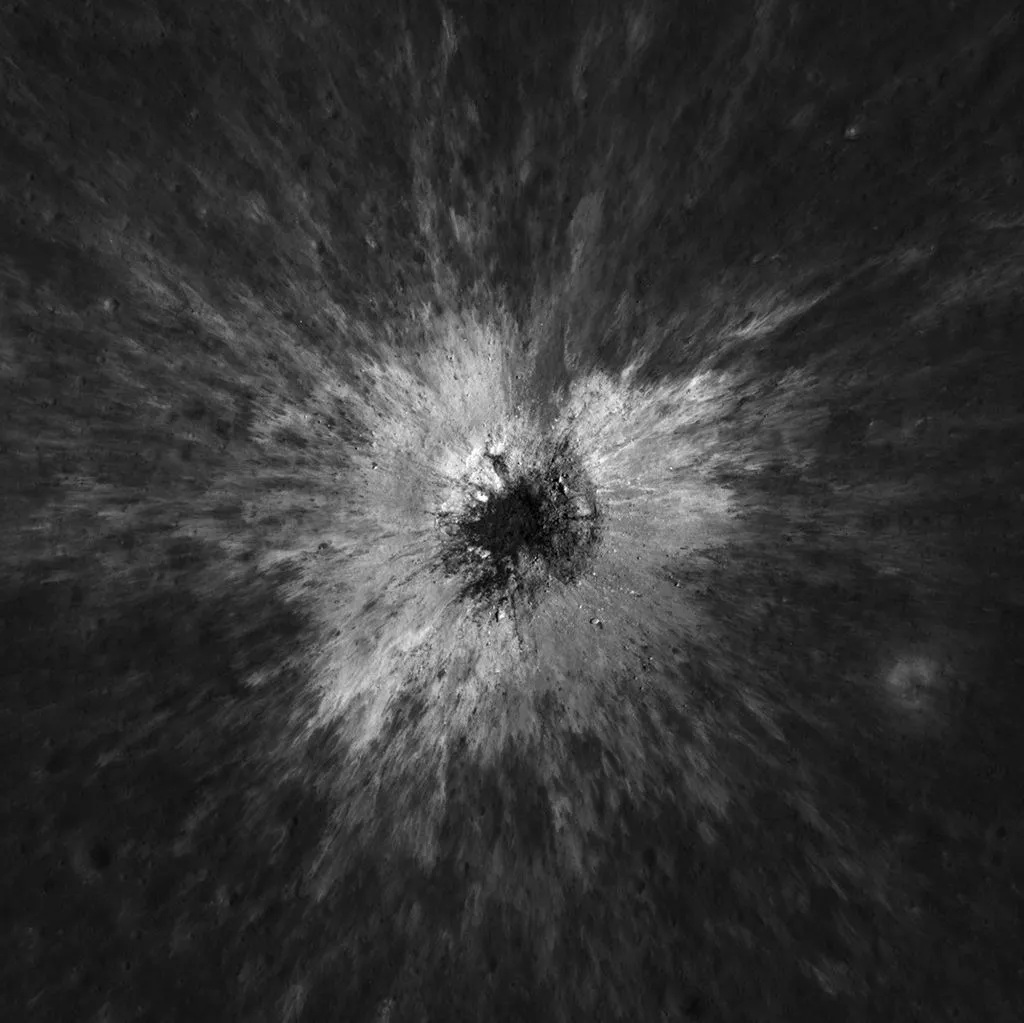
McGetchin Crater’s dark, 728-foot-wide (222 m) pit sits inside a bright halo of ejecta, with streaks of debris radiating out. The Lunar Reconnaissance Orbiter’s Narrow-Angle Camera captured this overhead view, which covers an area about 0.75 miles (1.2 km) across, on Dec. 5, 2025. Credit: NASA Goddard/Intuitive Machines
Sometime between April 11 and May 22, 2024, a comet or asteroid roughly the height of a three- to six-story building smashed into the Moon, leaving a crater 728 feet (222 meters) wide in its wake. A year and a half later, a NASA scientist spotted it, making it the largest newly formed crater humans have ever discovered in the solar system.
The crater is named McGetchin after the late lunar geologist Tom McGetchin, who shaped our understanding of lunar volcanoes and impact craters and provided field geology training for the Apollo crews. Robert Wagner, an image-processing specialist at Intuitive Machines and a Lunar Reconnaissance Orbiter (LRO) team member, discovered McGetchin on Oct. 24, 2025, while manually reviewing images from the Lunar Reconnaissance Orbiter Camera (LROC). An unusually large bright spot surrounded by a dark ring, the impact site stood out immediately.
“I just stopped, dropped everything, and started looking into what that spot was,” Wagner said in a statement. “It was by far the most obvious impact debris pattern I’ve ever seen in one of these images.”
(Source: astronomy.com)