
How NASA’s Nancy Grace Roman Space Telescope Will Open a Window into the Milky Way
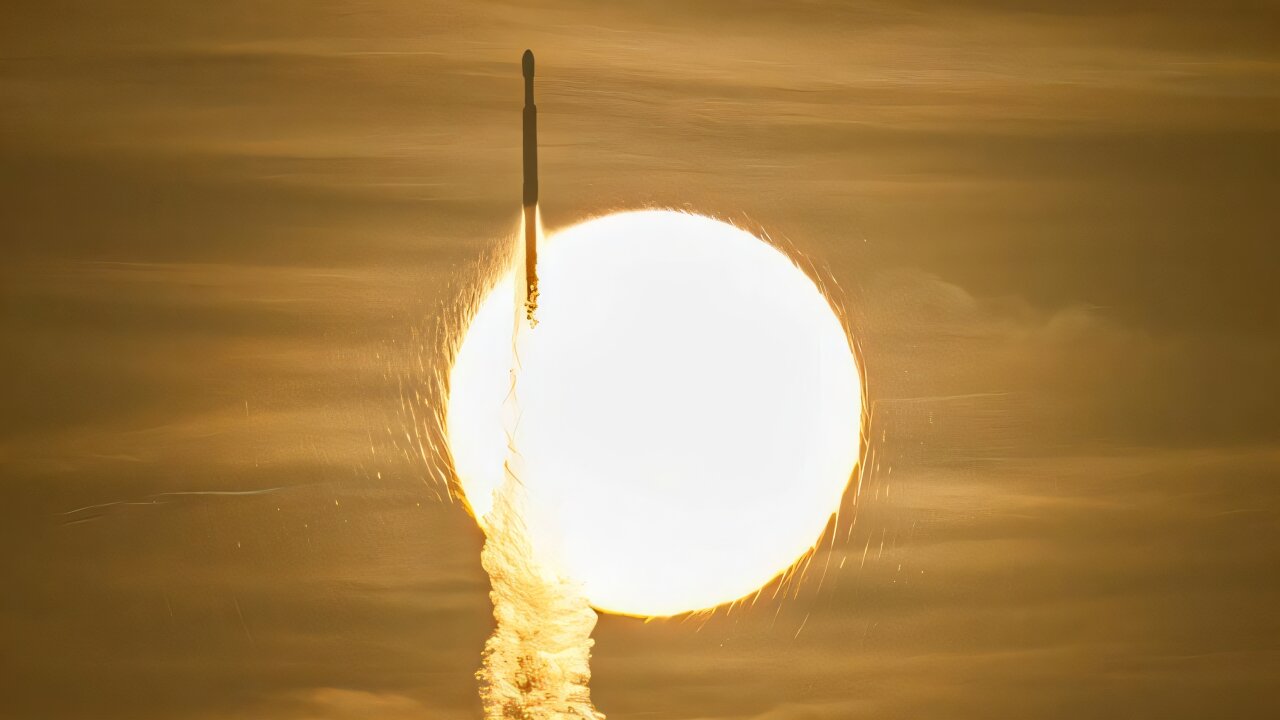
NASA’s Nancy Grace Roman Space Telescope transits the sun on board a SpaceX Falcon Heavy rocket during launch on Aug. 30, 2026, at NASA’s Kennedy Space Center in Florida. Credit: NASA/John Kraus
Look up at the night sky with the naked eye and it may seem like it rarely changes. Yet the universe is in constant flux. Stars drift through space, orbiting the center of the Milky Way as planets orbit them. They rotate, showing spots on their surfaces and sometimes producing violent outbursts that affect planetary atmospheres much like solar storms produce auroras on Earth.
As stars age, they can die dramatically as supernovae, releasing material that will form the next generation of stars and planets.
A new NASA telescope—named after NASA’s first chief of astronomy and first female executive, Nancy Grace Roman—will let us observe these changes to the night sky, almost as if we are watching a cosmic high-definition movie.
This is thanks to three capabilities working together: sharp images, a huge field of view and repeated observations.
(Source: phys.org)