Dark Skies Celebrated Across the U.S. – from Betsy Daniels
Betsy provides some highlights from International Dark Sky Week 2025, and provides some links on how you can get involved with BPAA as we work to raise awareness of light pollution.
Join us Saturday, May 10th at 7pm for another riveting science talk! This month’s speaker is Ishan Ghosh-Coutinho, who will be presenting their talk “Twinkle Twinkle Little Star: I Know Exactly What You Are!” Limited to 30 people, so register early!
The Speakers Bureau of Battle Point Astronomical Association is looking for individuals to join us in promoting science education through engaging talks and presentations!
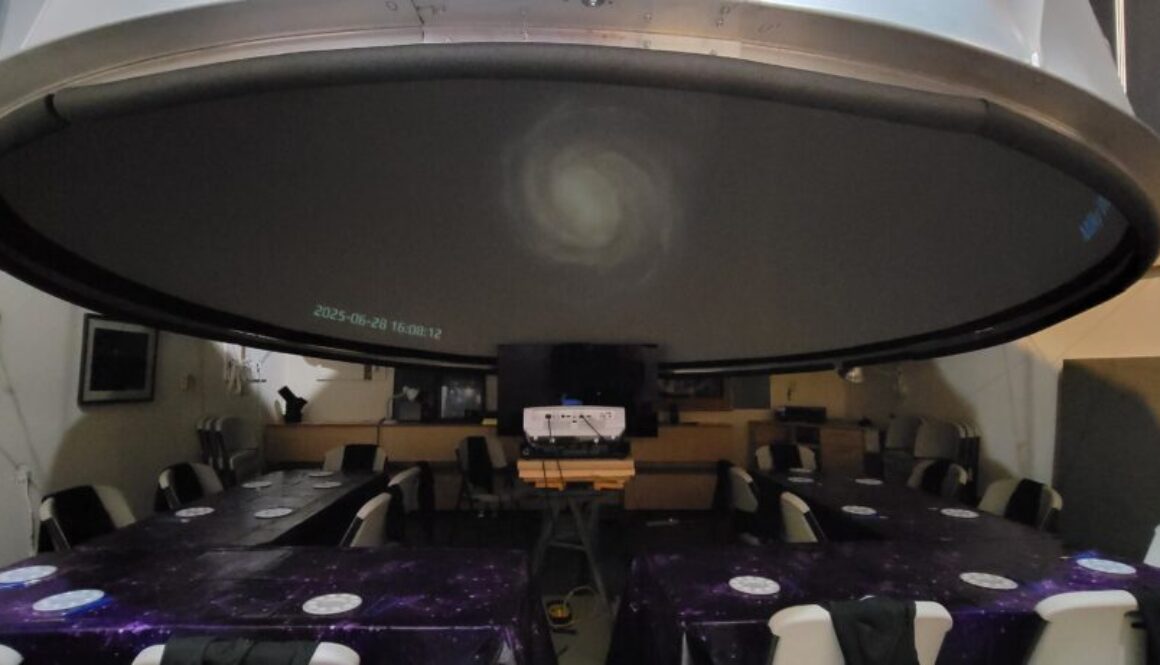
Movies at the Planetarium is poised to make a comeback, but we need volunteers to get trained up and help out!
Battle Point Astronomical Association invites you to Paint Nights at the Planetarium! Inspired by a planetarium show, you will learn to paint with acrylics on an 11” x 14” canvas suitable for framing.
May 20, 7:00pm
Topic: TBA
On the third Tuesday of each month, we have been engaging in COSMIC CONVERSATIONS at the Ritchie Observatory in Battle Point Park.
Every Tuesday, 10:00am – 3:00pm
There’s always a lot to do at the Ritchie observatory!
Source for events and links are In-The-Sky.org, Dominic Ford, Editor. The links provide details for each event including a scale on how difficult they are to observe.
The Vera C. Rubin Observatory, located on Cerro Pachón in northern Chile, is set to begin a significant 10-year sky survey aimed at mapping the universe in 3D and searching for transient phenomena. This 8.4-meter telescope will complement existing facilities in the area, including the Gemini South and SOAR telescopes. The observatory’s design minimizes air turbulence, and it features a coating plant for maintaining its giant mirrors. Despite delays caused by the Covid pandemic, the observatory is expected to achieve first light within the year.