WHAT’S UP(COMING)! – Observation Calendar May-Jul 2026
Source for events and links below are In-The-Sky.org, Dominic Ford, Editor. The links provide details for each event including a scale on how difficult they are to observe.

Source for events and links below are In-The-Sky.org, Dominic Ford, Editor. The links provide details for each event including a scale on how difficult they are to observe.
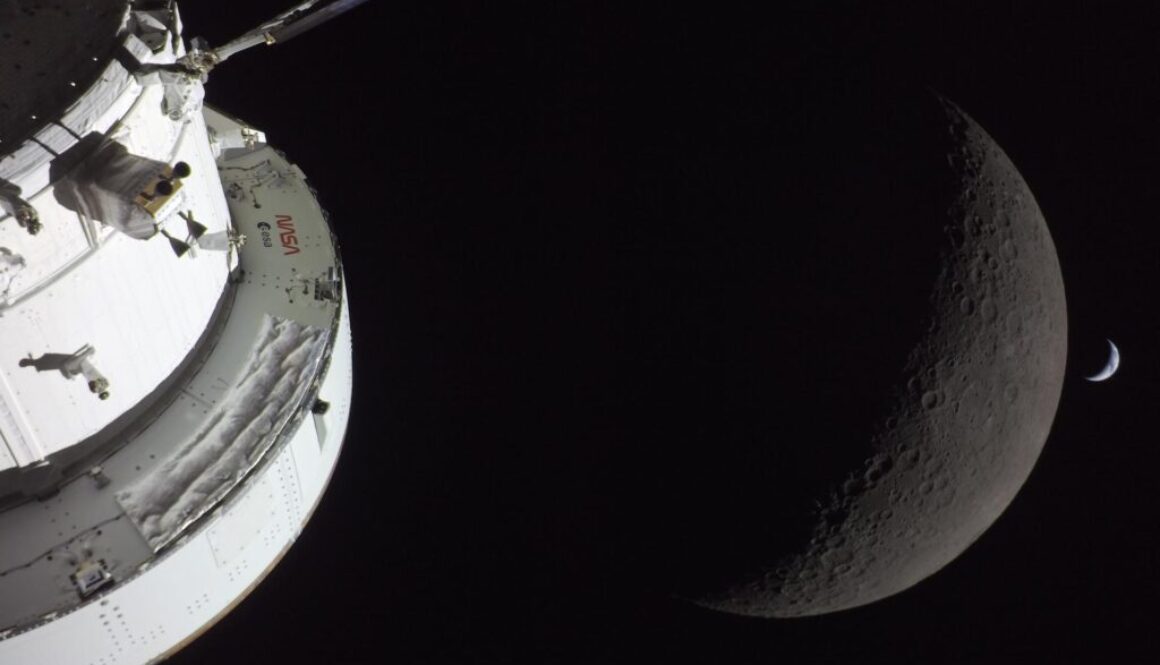
NASA’s Orion spacecraft captures the Moon and the Earth in one frame during the Artemis II crew’s deep space journey at 6:39 p.m. ET on the sixth day of the mission. The right side of NASA’s Orion spacecraft is seen lit up by the Sun. A waxing crescent Moon is visible behind it. And then, a crescent Earth, tiny compared to the Moon, is about to set below the Moon’s horizon on the right. Credit: NASA
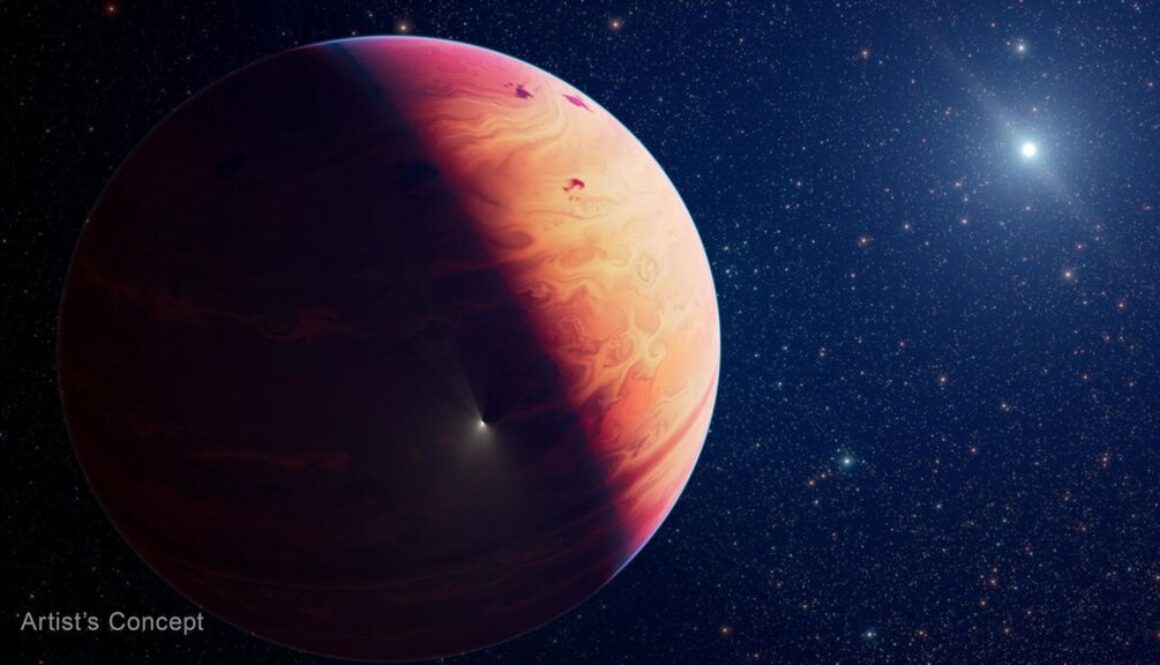
Planets, like those in our solar system, form in a bottom-up process where small bits of rock and ice clump together and grow larger over time. But the heftier the planet, the harder it is to explain its formation that way.
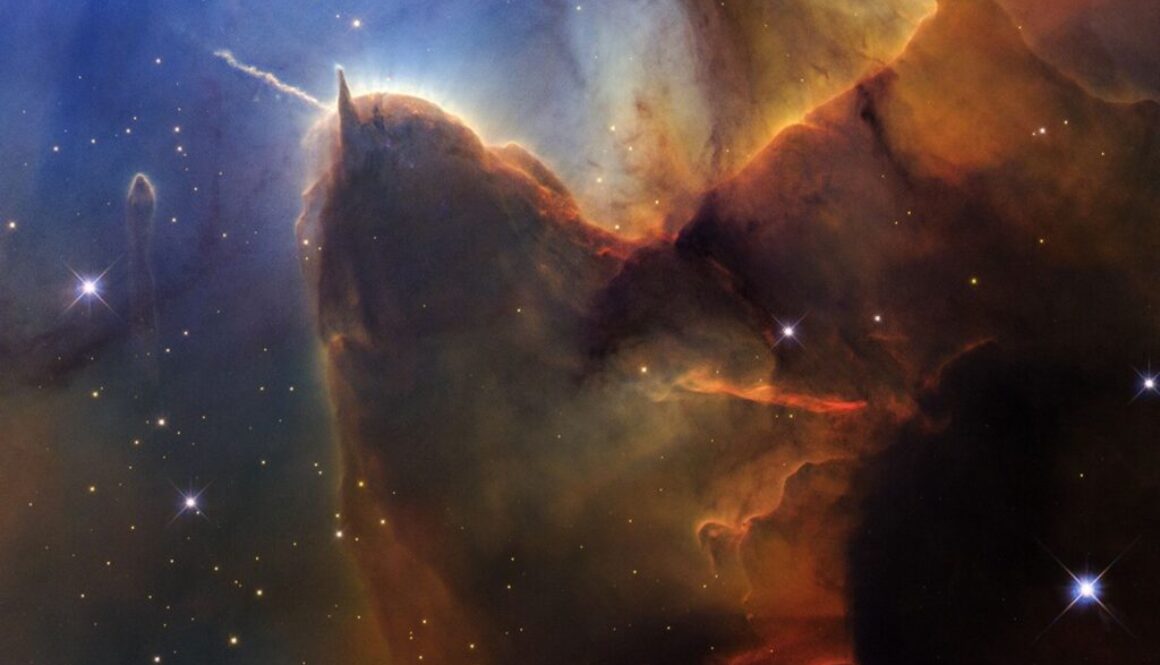
This shimmering region of star-formation, a close-up of the Trifid Nebula about 5,000 light-years from Earth, was captured in intricate detail by NASA’s Hubble Space Telescope. The colors in Hubble’s visible light image, which marks the 36th anniversary of the mission’s launch on April 24, are reminiscent of an underwater scene filled with fine-grained sediments fluttering through the ocean’s depths.
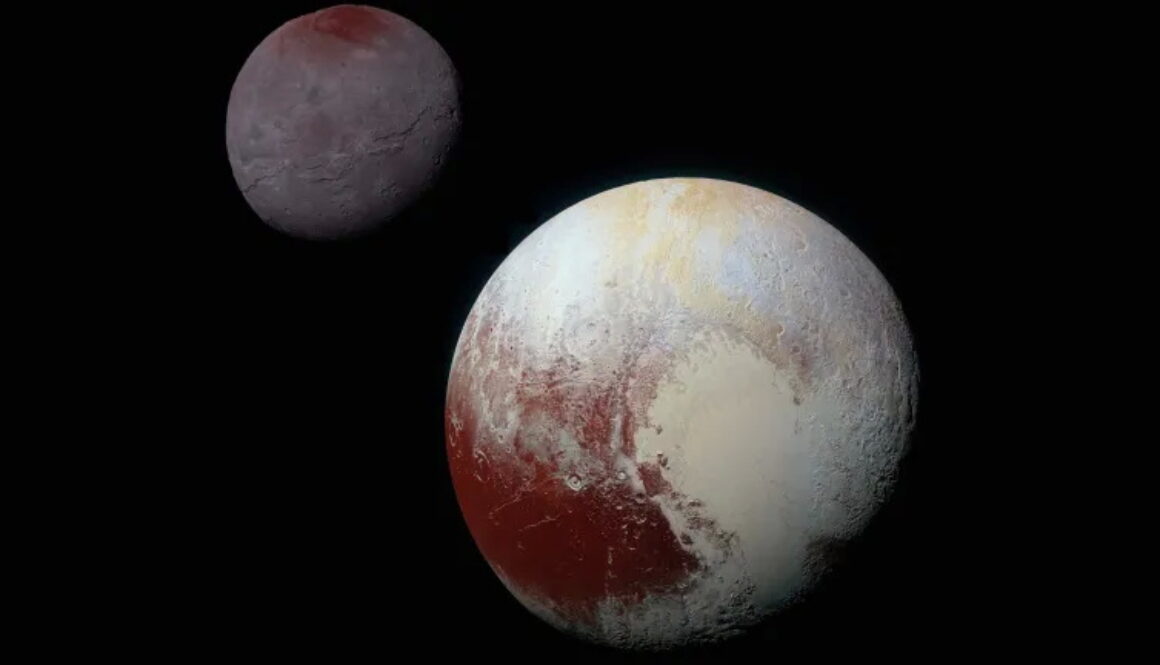
From 1929 until 2006, Pluto lived in the imagination of children and adults alike as the ninth and outermost planet in our solar system. Until 1978, with the discovery of its giant moon, Charon, it was the only known large object in our solar system that orbited beyond the reach of Neptune. But the story began to change shortly after that. In the 1990s and 2000s, a tremendous number of new objects were discovered — including planets orbiting stars other than our Sun (exoplanets) and a wide variety of Kuiper belt objects (trans-Neptunian objects) both large and small — that compelled us to rethink just what it meant for an object to be considered a planet.
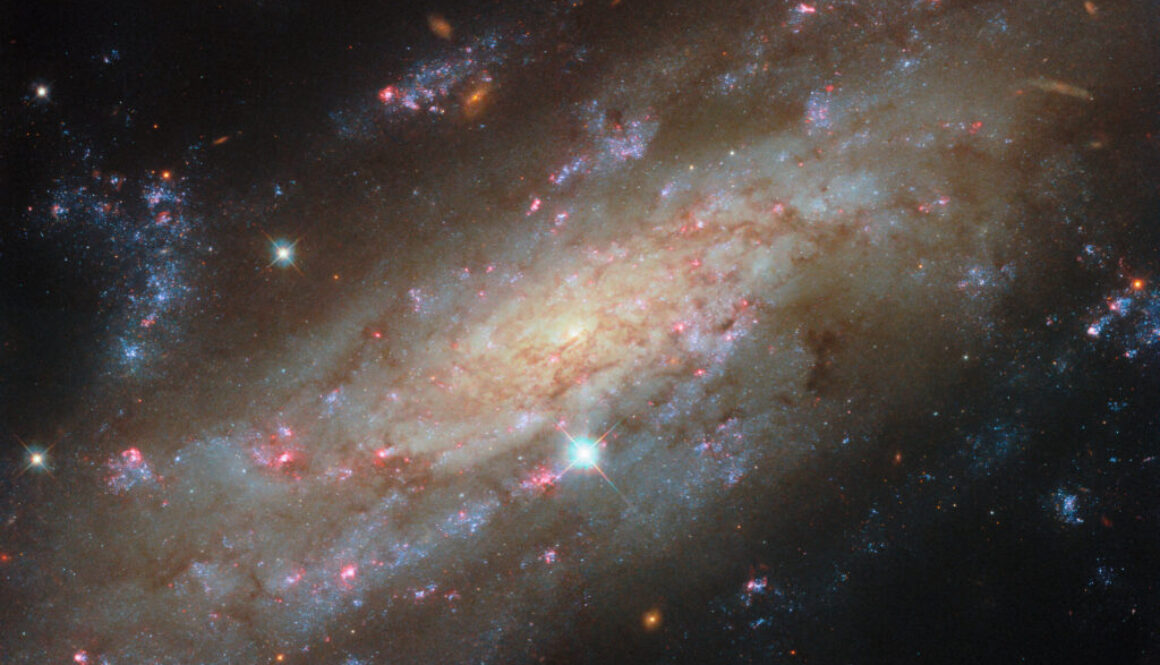
In this new image by the NASA/ESA Hubble Space Telescope, a spiral galaxy glittering with star clusters is the center of attention. NGC 3137 is located 53 million light-years away in the constellation Antlia (The Air Pump). As a nearby spiral galaxy, this target offers astronomers an excellent opportunity to study the cycle of stellar birth and death, as well as giving researchers a glimpse of a galactic system similar to our own.
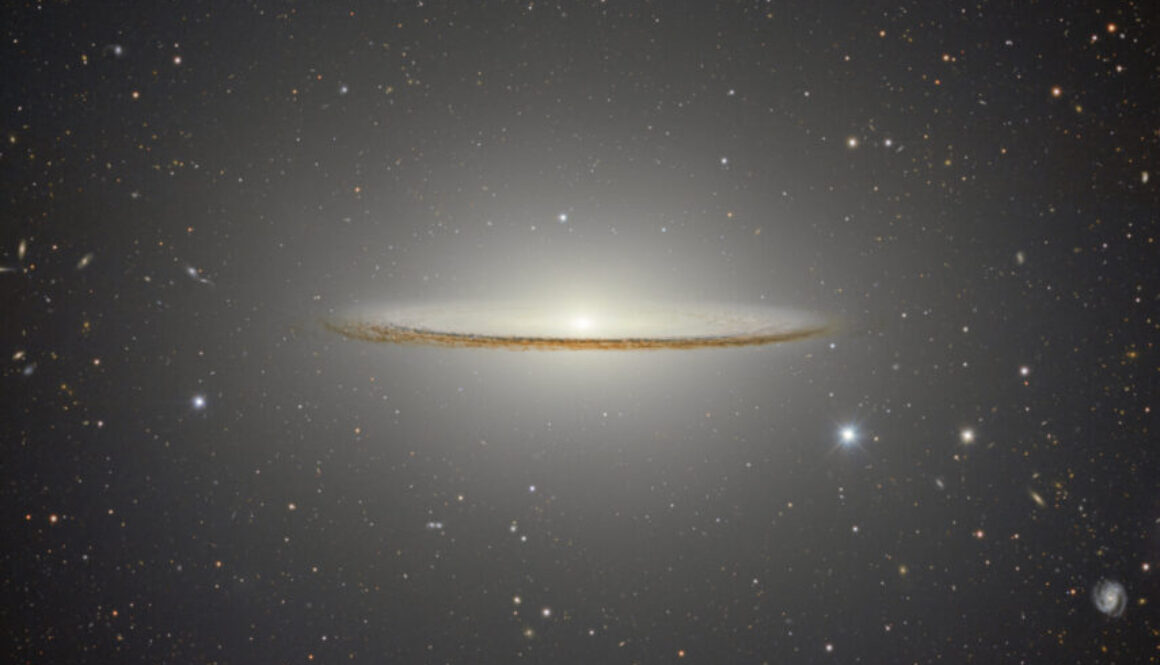
Messier 104, nicknamed the Sombrero Galaxy, is a popular target for amateur observing and astronomical research. Its recognizable extended halo, as well as a faint stellar stream, are captured in exquisite detail in this image from the Department of Energy-fabricated Dark Energy Camera (DECam), mounted on the U.S. National Science Foundation Víctor M. Blanco 4-meter Telescope at Cerro Tololo Inter-American Observatory in Chile, a Program of NSF NOIRLab.

Dark sky conservation benefits wildlife and their habitats, reduces health and safety risks to humans, saves energy and reduces costs. Light pollution has devastating effects on migrating birds, native plants, and pollinators. Join us at our Dark Sky events in April to learn how small changes in our own backyard can make a difference.
BPAA’s partners DarkSky Olympic Peninsula (DSOP) are featured in an upcoming episode of Engaging Kitsap on the Bremerton Kitsap Access Television (BKAT) station. The episode will start airing on BKAT (Comcast Channel 12/Astound Channel 3 or 70) this Thursday, April 2 at 7:30pm.

Thank you to all who came together during the 2026 Kitsap Great Give! Your gifts more than DOUBLED the total from last year to support BPAA!