Simply Looking Up Inspires Scientific Exploration
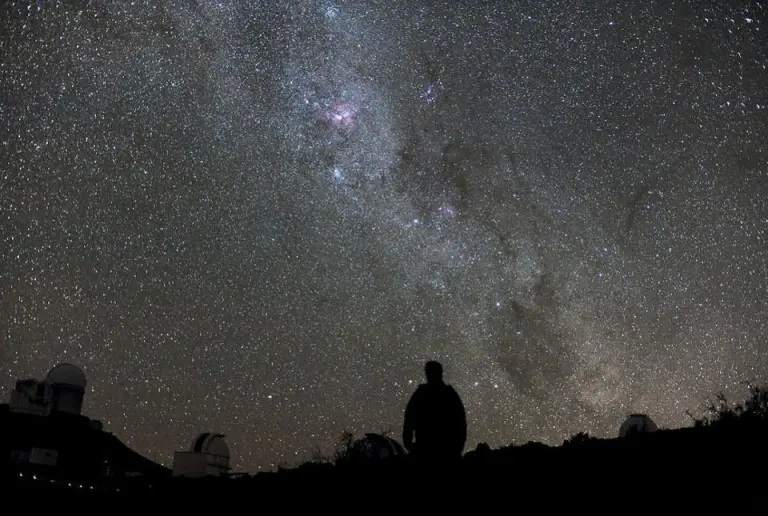
Although extended objects, like the plane of the Milky Way and a few distant galaxies beyond our own, are identifiable with the naked eye, there are only a few thousand stars that can be seen and resolved with the naked eye. Depending on your eyesight and the darkness conditions, most humans can see between 6000 and 9000 stars if you could see the entire sky at once. Credit: ESO/Håkon Dahle
Ever since the first human beings looked up at the night sky, it has been a source of wonder, inspiration, and awe.
Today, most of humanity only has access to a heavily polluted sky rather than the pristine views our ancestors enjoyed, but that sense of awe and wonder still remains.
Here’s a reminder of what’s out there, beyond the confines of this Earth, that calls to our sense of adventure, exploration, and our urge to know the unknown.
The night sky, accessible to each of us, holds a sense of wonder unlike anything else.
For countless generations, humanity’s skyward gaze has revealed a heavenly abyss.
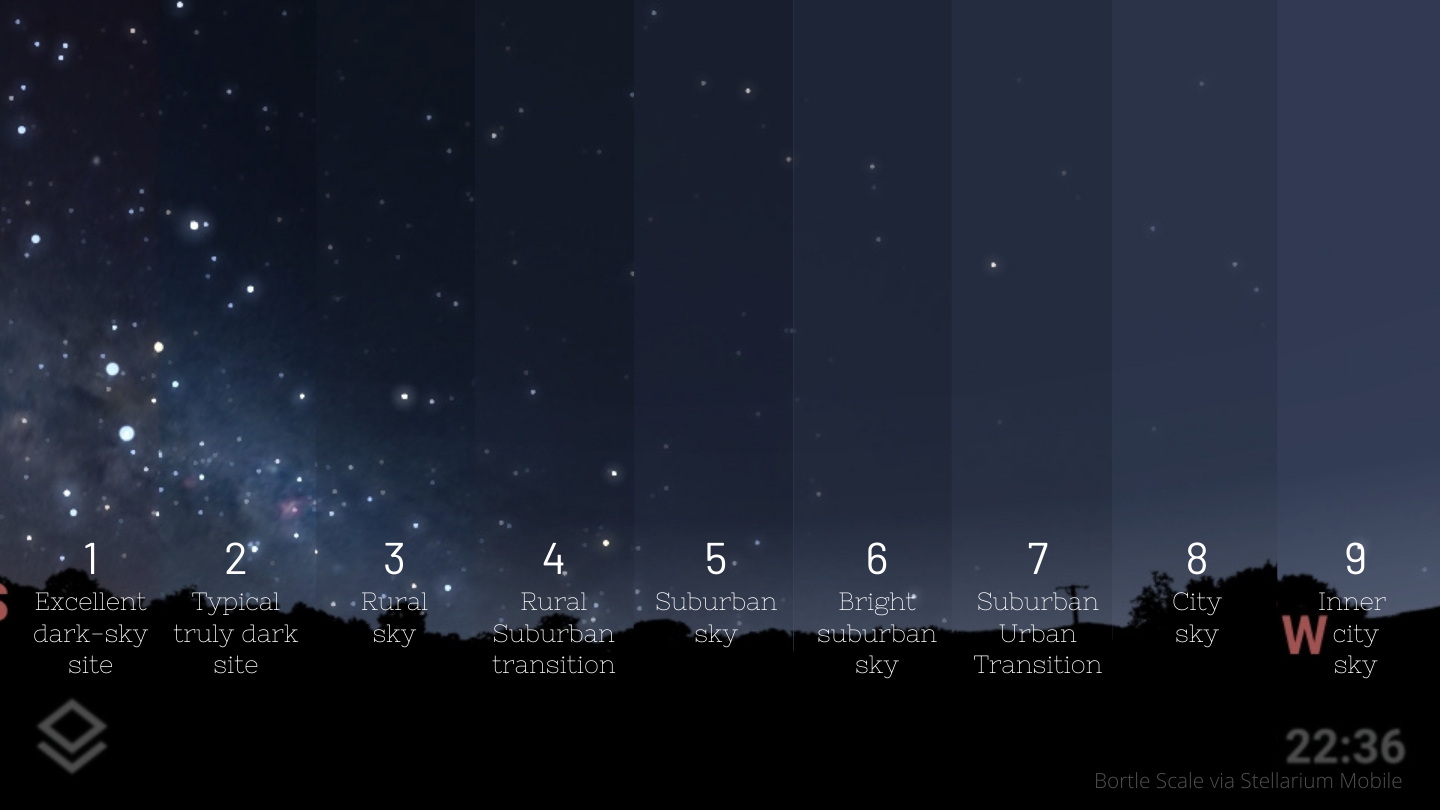 The effects of light pollution on what a naked-eye observer can see in the night sky as defined by the Bortle Scale. The artificial light produced by objects on the ground can wash out the naturally occurring objects in the night sky, rendering many objects unable to be seen. Light pollution can wash out all but the brightest meteors during a meteor shower. Credit: Stellarium Labs
Today, light pollution and satellite contamination steal those pristine views from many of us.
Even so, each glimpse of what lies beyond Earth compels us to search farther.
Out there, among the stars, galaxies, and beyond, lie solutions to the greatest mysteries of all.
This multiwavelength view of the two largest, brightest galaxies in the M81 group shows stars,
Each glittering point of starlight contains its own stellar system, with planets, moons, and potentially even life.
We’ve witnessed individual planets forming, and may soon discover exobiological activity.
(Source: Big Think)