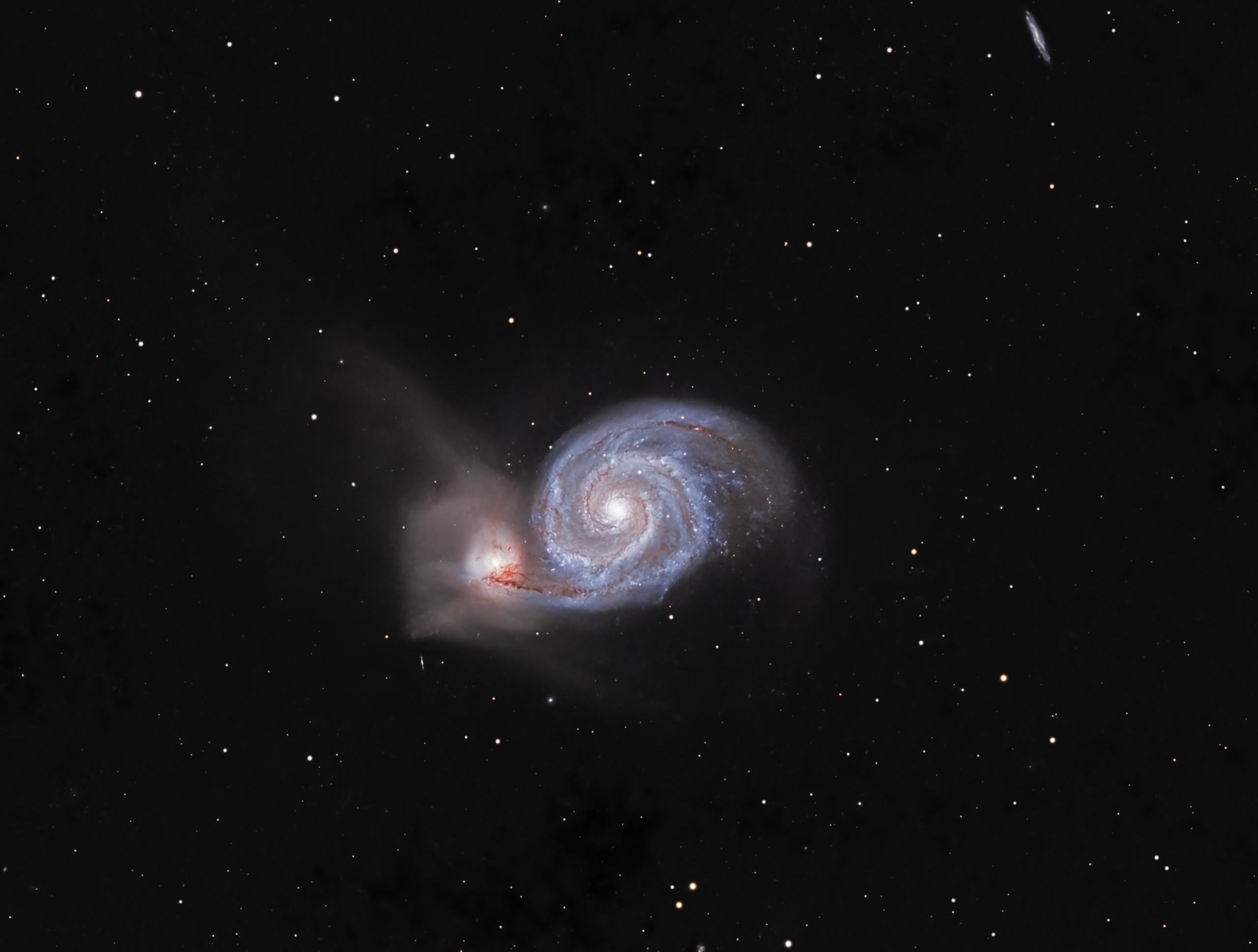
The Whirlpool Galaxy is a perennial favorite for star gazers in the month of May. It is an interacting grand design spiral galaxy and was first discovered by Charles Messier in 1773. It and its paired dwarf galaxy (M51b) lie 31 million light-years from Earth in the constellation Canes Venatici and can be viewed even with small telescopes. This “nebula”, as spotted by Messier was first noticed to have a spiral structure by William Parsons but it wasn’t until much later that Edwin Hubble was able to discern Cepheid Variable stars in the spiral structure of these “spiral nebulae” that they were determined to be far off galaxies.
The bright blue brilliance of the hot, young stars in its spiral arms creates a stark contrast to the deep red of its many stellar nurseries. Though not particularly difficult to image, the Whirlpool Galaxy’s beautiful colors and unusual shape makes it a yearly draw. This image was captured from a backyard in Sequim over two nights in April and May of this year.