NASA’s Webb Reveals Dynamic Panorama of Star Formation
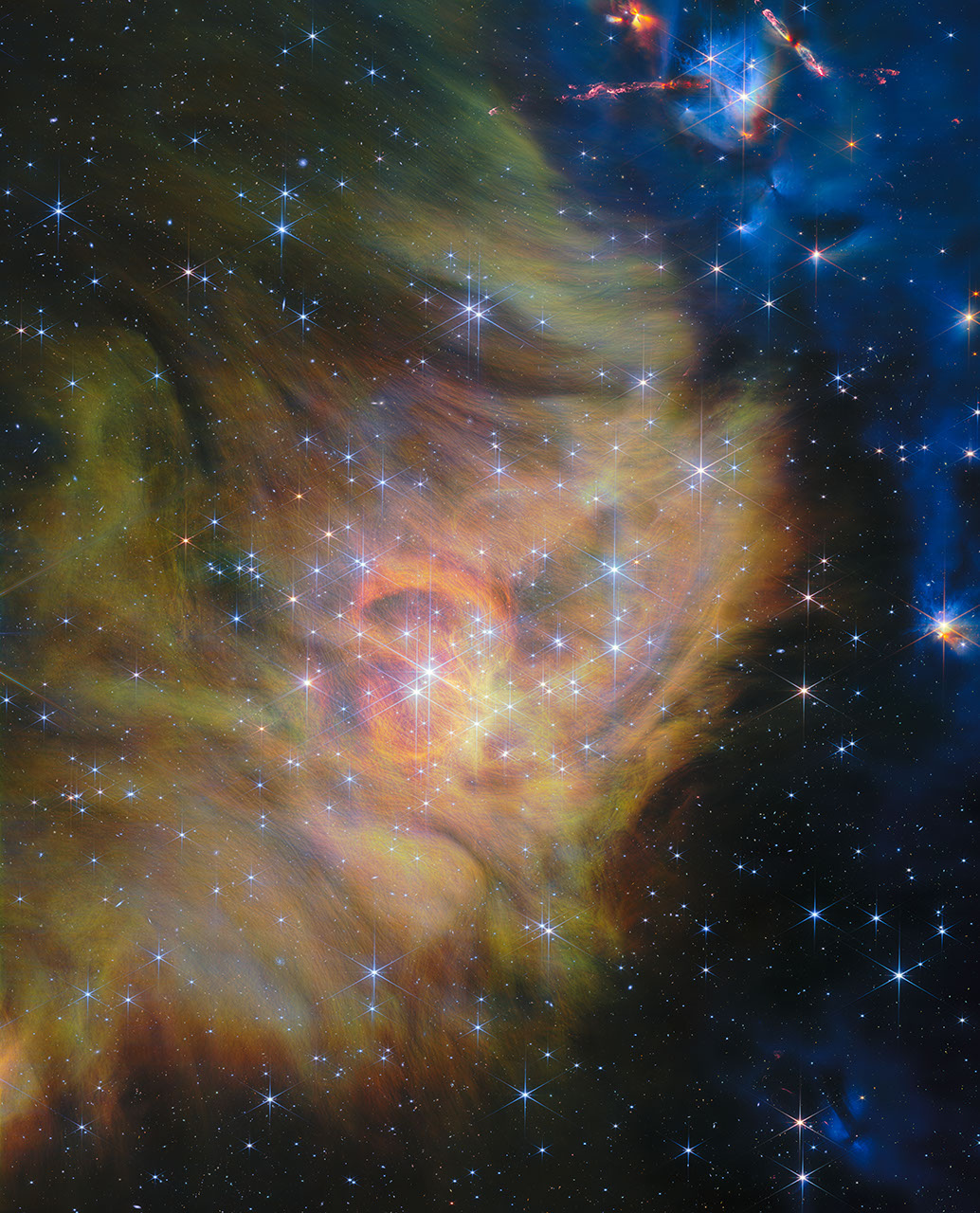
NASA’s James Webb Space Telescope recently observed IC 348, a star-forming region just 1,000 light-years away from Earth. Webb’s sharp vision revealed tiny brown dwarfs, some just twice Jupiter’s mass, and young stars ejecting powerful jets crashing into surrounding gas and dust. Credits: Image: NASA, ESA, CSA, Kevin Luhman (PSU), Catarina Alves de Oliveira (ESA), Mahdi Zamani (ESA/Webb)
This starry view of the nearby star-forming region IC 348 is one of the largest images released to date from NASA’s James Webb Space Telescope. Using Webb, astronomers searched IC 348 for brown dwarfs, which are less massive than the smallest stars. The researchers discovered brown dwarfs just twice the mass of Jupiter, bringing the study of these curious objects into a new mass range and revealing new insights about the star formation process.
The star-forming region IC 348 is located just 1,000 light-years away in the constellation Perseus. In regions like IC 348, cold clouds of molecular hydrogen gas collapse to form new stars, creating glowing, sculpted scenes like this one. The star-formation process can create widely varied objects, from massive stars that expire after only a few million years in core-collapse supernova explosions to the smallest and most common stars, which are long lived and produce powerful stellar storms.
(Source: science.nasa.gov)