A Revolution Has Come in the First of the Big Bang’s 4 Cornerstones
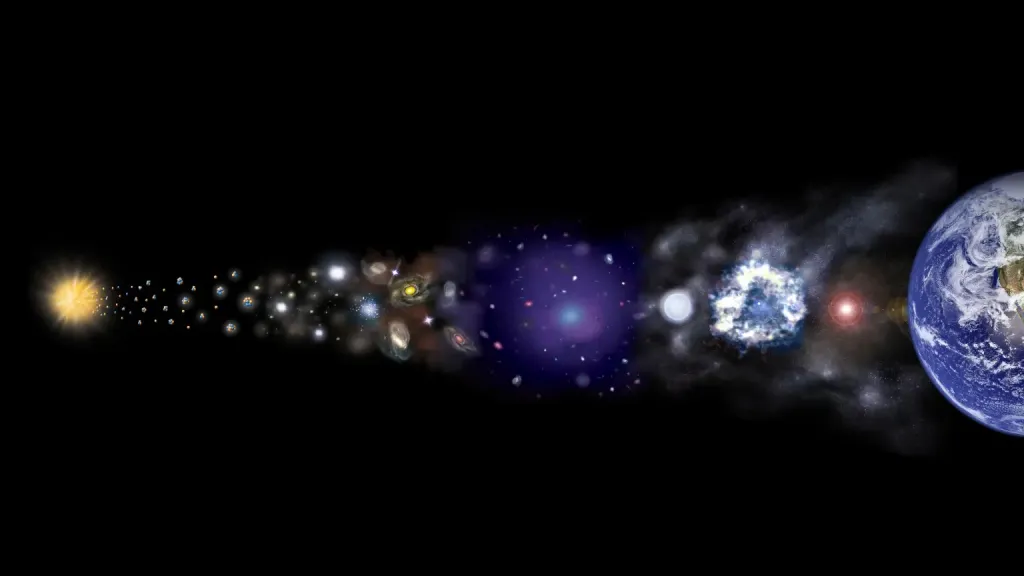
Our Universe, from the hot Big Bang until the present day, underwent a huge amount of growth and evolution, and continues to do so. Our entire observable Universe was approximately the size of a modest boulder some 13.8 billion years ago, but it has expanded to be ~46 billion light-years in radius today. The complex structure that has arisen must have grown from seed imperfections of at least ~0.003% of the average density early on, and has gone through phases where atomic nuclei, neutral atoms, and stars first formed, eventually giving rise to our Solar System, planet, life, and humans. Credit: NASA/CXC/M. Weiss
There’s a huge problem with our attempts to uncover the origins of the Universe: we only see our Universe as it is today, 13.8 billion years after the conditions marking the hot Big Bang first came into existence. Sure, we look at objects or events that occurred very far away, and by doing so, we can see the Universe as it was long ago, with the arriving light encoding the conditions that were present when that light was emitted. But because it’s so far away, even with our biggest, most powerful telescopes, we can only see the brightest objects and events that existed back then, and only at low resolution.
Due to these observational limitations, if we want to see faint features in great detail and to extraordinary precisions, we are confined to looking close by: to things that exist in the here-and-now, in the late-time Universe. For three of the Big Bang’s cornerstones,
-
the expanding Universe,
-
the growth and evolution of galaxies, galaxy clusters, and the cosmic web,
-
and the leftover glow of radiation, the cosmic microwave background (CMB),
seeing the Universe out to great distances at the highest precision possible is how we thought up, confirmed, and validated the Big Bang picture up to the present day.
But the fourth cornerstone, Big Bang nucleosynthesis, has long been the lowest-precision and most poorly-measured (and most often disputed) line of evidence that the Big Bang provides. But here in the latter half of 2026, that is beginning to change, as the LBT Yp Project has just released a series of papers with the most accurate, precise measurements of the primordial helium abundance ever. Perhaps surprisingly, the evidence comes not from extremely early times, but from the nearby Universe.
(Source: Big Think)