Sombrero Galaxy’s Vast Halo Emerges in Rare Detail 30 Million Light-Years Away
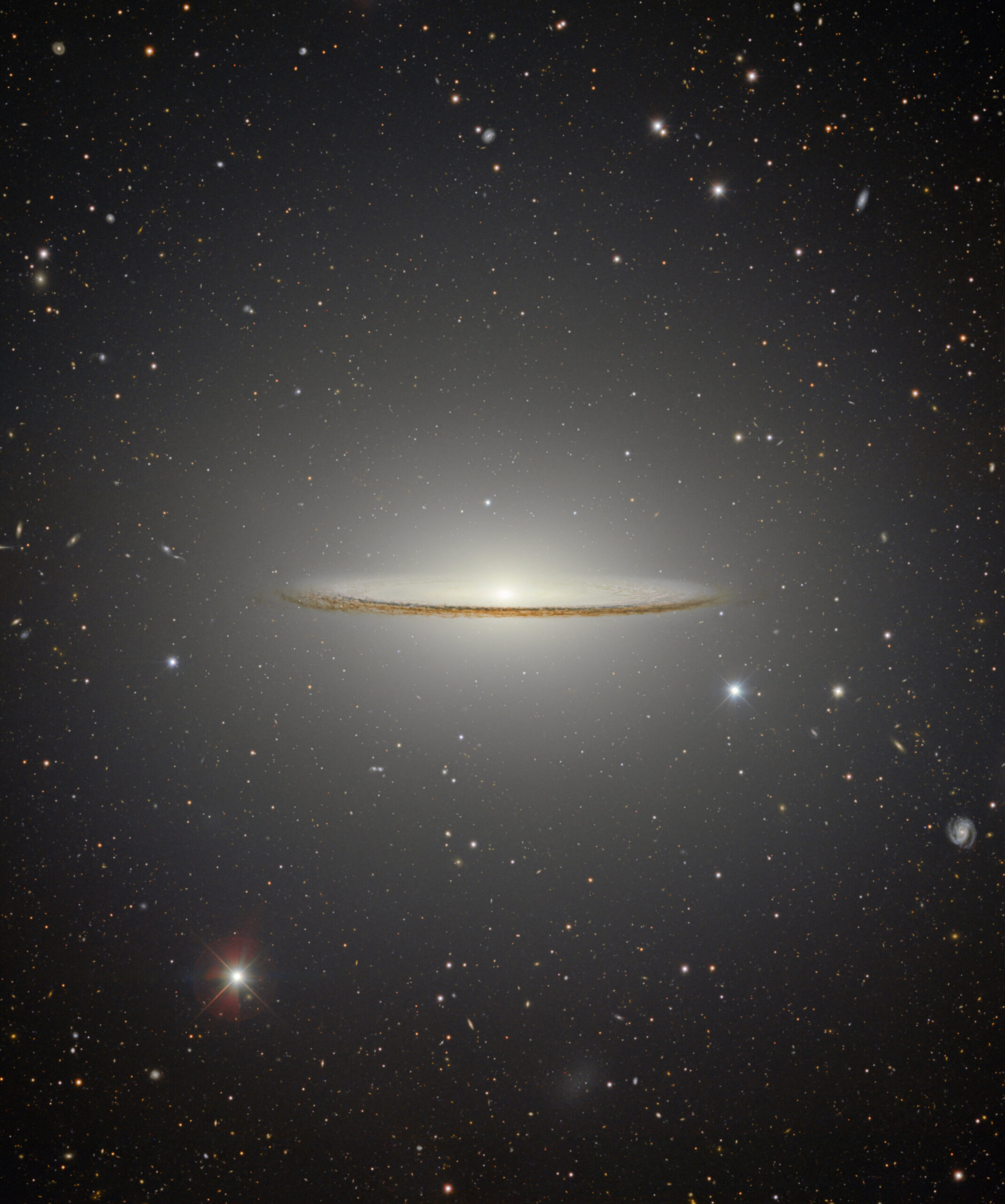
Close-up of the central parts of the Sombrero Galaxy Credit: CTIO/NOIRLab/DOE/NSF/AURA Image Processing: T.A. Rector (University of Alaska Anchorage/NSF NOIRLab), D. de Martin & M. Zamani (NSF NOIRLab)
Messier 104, nicknamed the Sombrero Galaxy, is a popular target for amateur observing and astronomical research. Its recognizable extended halo, as well as a faint stellar stream, are captured in exquisite detail in this image from the Department of Energy-fabricated Dark Energy Camera (DECam), mounted on the U.S. National Science Foundation Víctor M. Blanco 4-meter Telescope at Cerro Tololo Inter-American Observatory in Chile, a Program of NSF NOIRLab.
The Sombrero galaxy (Messier 104) is a galactic masterpiece that captivates scientists and astronomy enthusiasts alike. Its intricate system of globular star clusters lends insight into stellar populations, and astronomers are intrigued by the supermassive black hole at its center. Its distinctive visual features and relative brightness make it a favorite among amateur astronomers. The fascinating story of its discovery, involving three esteemed astronomers, has earned it a spot on one of the most important lists of deep sky objects. Today, it stands as one of the most iconic galaxies in the night sky.
Messier 104 resides approximately 30 million light-years from Earth in the constellation Virgo (see finder chart). Spanning an impressive 50,000 light-years across, it is among the largest objects of the Virgo Galaxy Cluster. Despite its grandeur, it appears relatively dim in the night sky—just below the threshold of naked-eye visibility, though it can be observed with a small telescope or binoculars.
(Source: phys.org)